The most versatile spread: enough cards to show a pattern, while remaining easy to see as a whole.
Three cards create relationship. One card can answer a focus; two establish tension; the third shows development, mediation, or consequence. The value lies less in the labels than in the movement between them.
Past, Present, Future is only one framing. Choose labels that match the question. A relationship question may need You, Them, The Relationship; a practical choice may need Situation, Action, Outcome.
When to choose this spread
A situation with a clear beginning, present tension, and direction.
A comparison between two forces and what connects them.
A compact reading that still allows contrast and synthesis.
A question that benefits from action or focus, not an exhaustive map.
When to choose less or differently
You are treating “Future” as an unchangeable prediction.
Each position contains several hidden subquestions.
You have not decided what the three positions mean before drawing.
Positions
1. Past — The condition, choice, or inheritance that shaped the present.
2. Present — What is active now, including the tension the seeker can work with.
3. Future — The direction of travel if the present pattern continues.
Variations
Time: Past · Present · Future
Practical: Situation · Action · Outcome
Relationship: You · Them · The relationship
Development: Strength · Challenge · Where to focus
How to read the spread
Read the middle card first if it names the active tension.
Compare the direction, element, and pace of the outer cards.
Ask whether the third card continues, corrects, or releases the first two.
Treat time positions as influences and trajectories, not fixed events.
State the spread in one sentence before expanding the details.
Complete worked example
How can I move through uncertainty about changing direction at work?
The current role is stable but no longer feels worthwhile. A new field is attractive, although starting again feels risky.
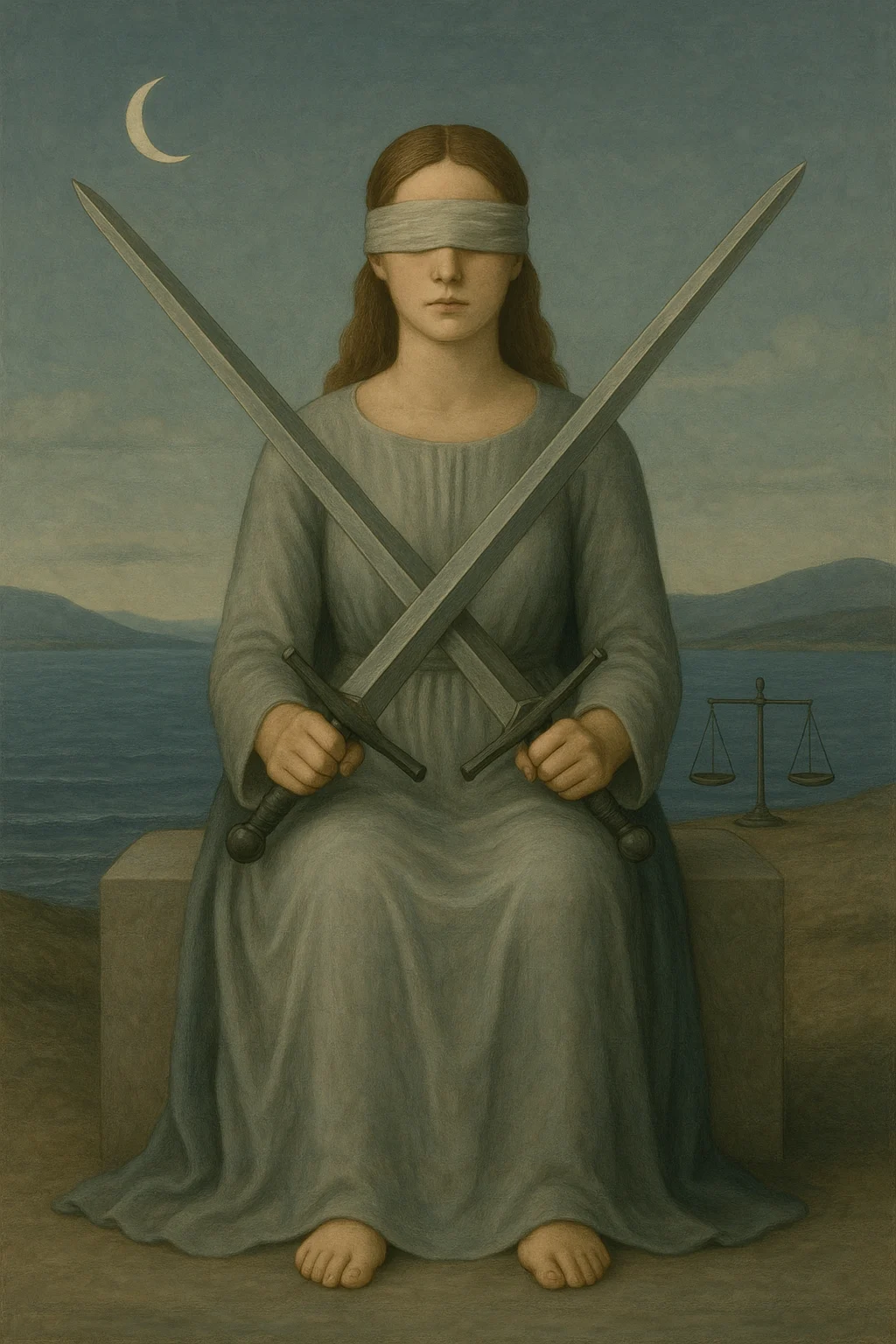
Situation
Two of Swords — Reversed
The stalemate is becoming harder to maintain. Reversed, the Two of Swords suggests that neutrality has stopped protecting you and started consuming energy. You may be waiting for certainty that can only emerge after you test the choice.
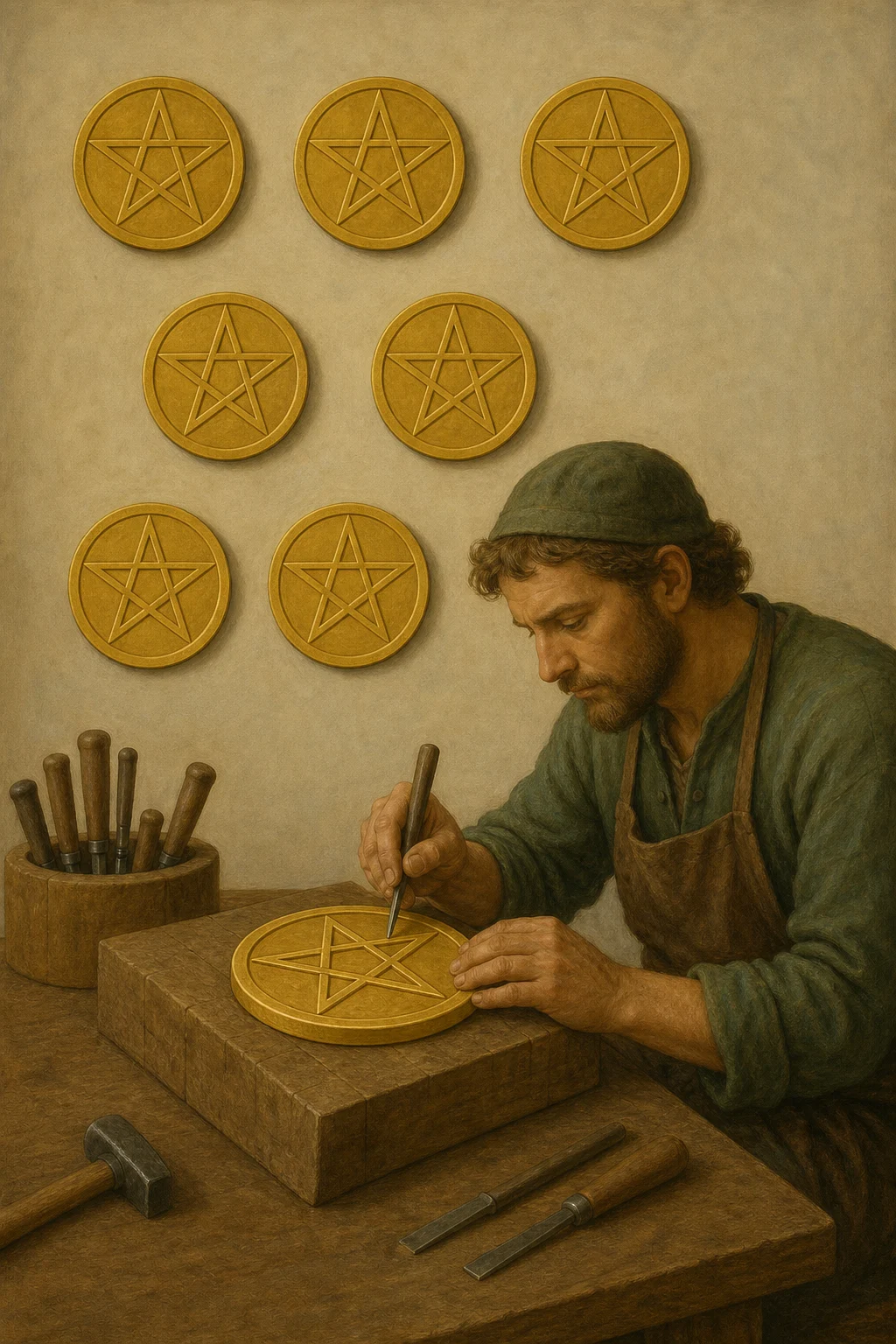
Action
Eight of Pentacles — Upright
The useful action is practical: study the new field, make something small, and speak to people already doing the work. Repeated effort will replace guesswork with evidence and begin to build the skills you need.
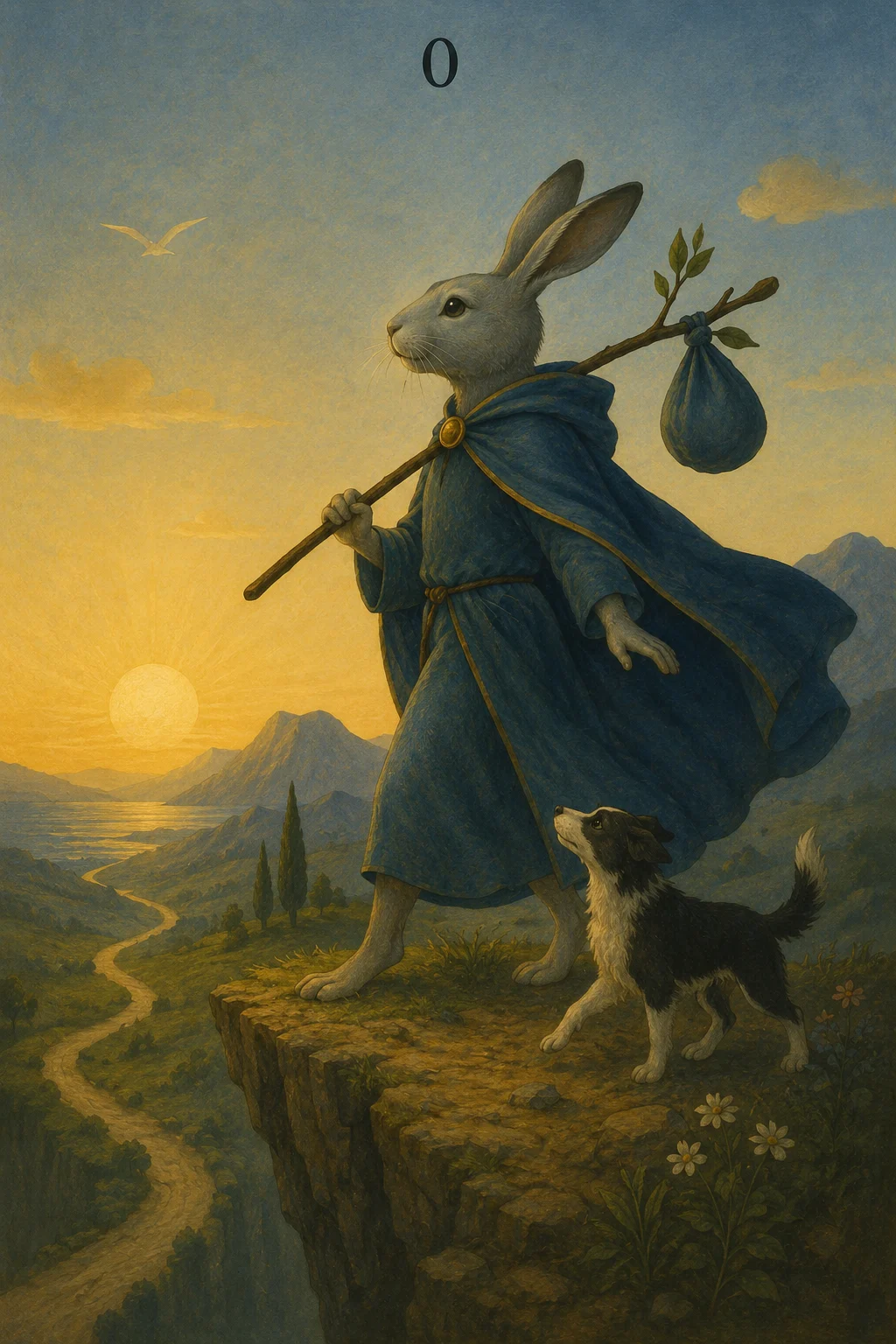
Outcome
The Fool — Upright
The Fool shows renewed movement and a beginner’s freedom. It does not promise that the new path is safe. It suggests that you can take a well-considered first step without knowing every step that follows.
The Reader's synthesis
This spread moves from indecision, through practical learning, into a genuine beginning. The Eight of Pentacles connects the other two cards. It turns a possible escape from the current role into an informed test of something new.
Test the new direction before making an ultimatum. Give it a real place in your week, produce work, gather feedback, and see whether the attraction becomes more substantial with effort. You do not need to leave immediately, but inaction is still a choice.
Patterns worth noticing
The sequence moves from Air to Earth to a Major threshold: thought, evidence, then movement.
The only reversal appears in Situation, suggesting the old holding pattern is the part losing viability.
Both the Eight and The Fool describe beginnerhood, but one builds skill while the other restores possibility.
Follow-up questions
What small experiment would give me the most useful evidence about the new direction?
What am I afraid the decision would say about the years already invested in my current work?